Embodied Listening in a Human-Plant-Technology Encounter
具身聆听在人、植物与技术之间的感知实验
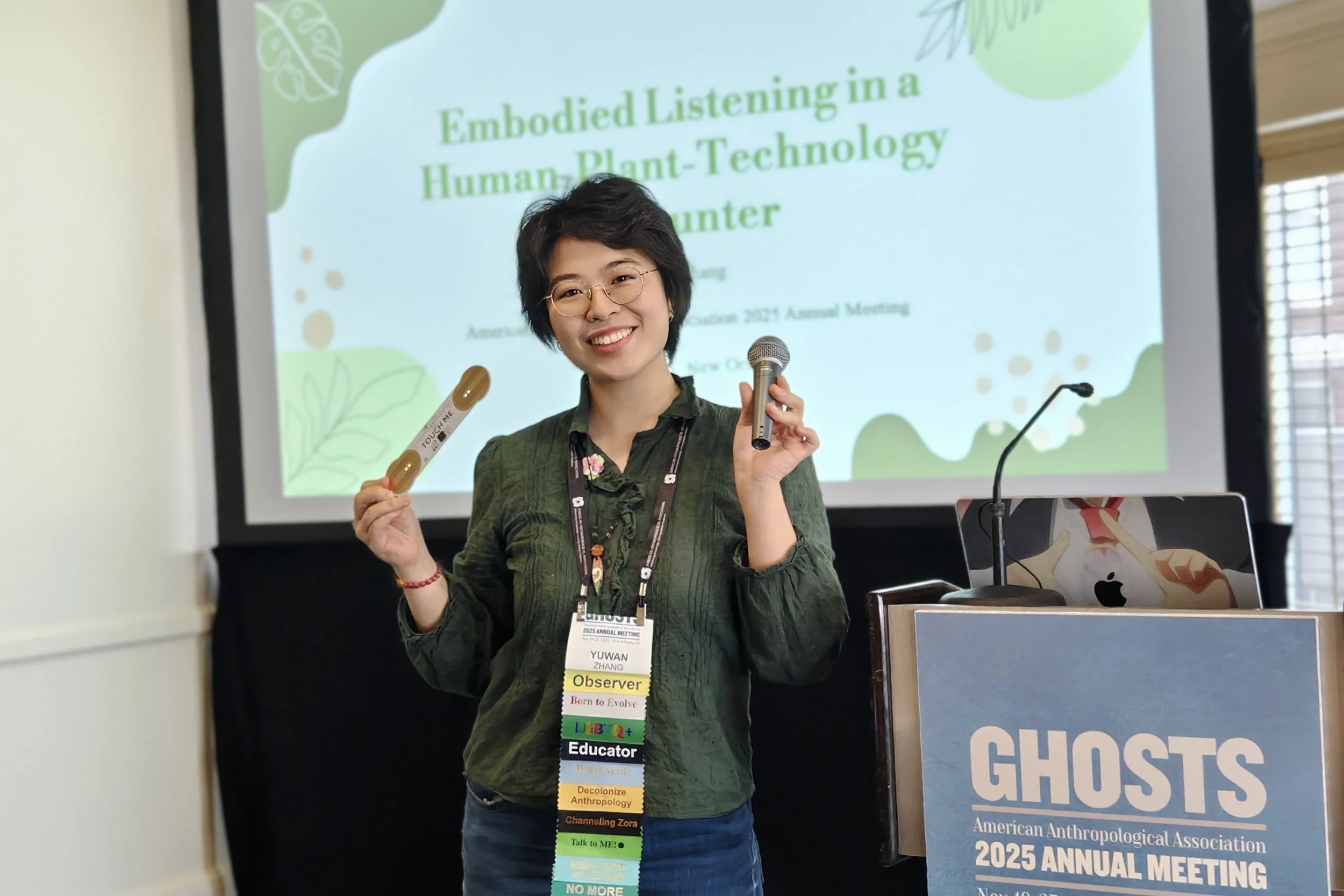
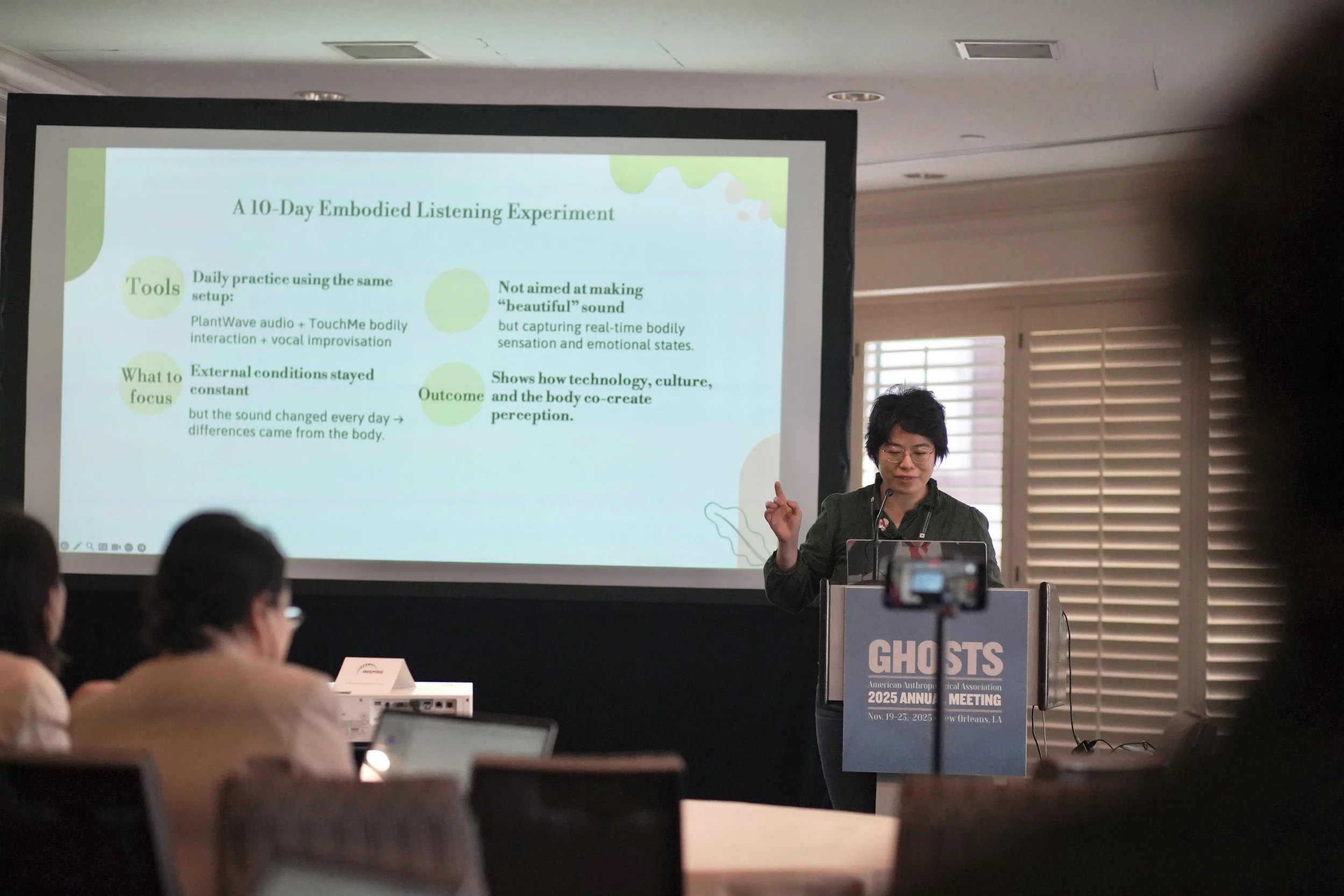
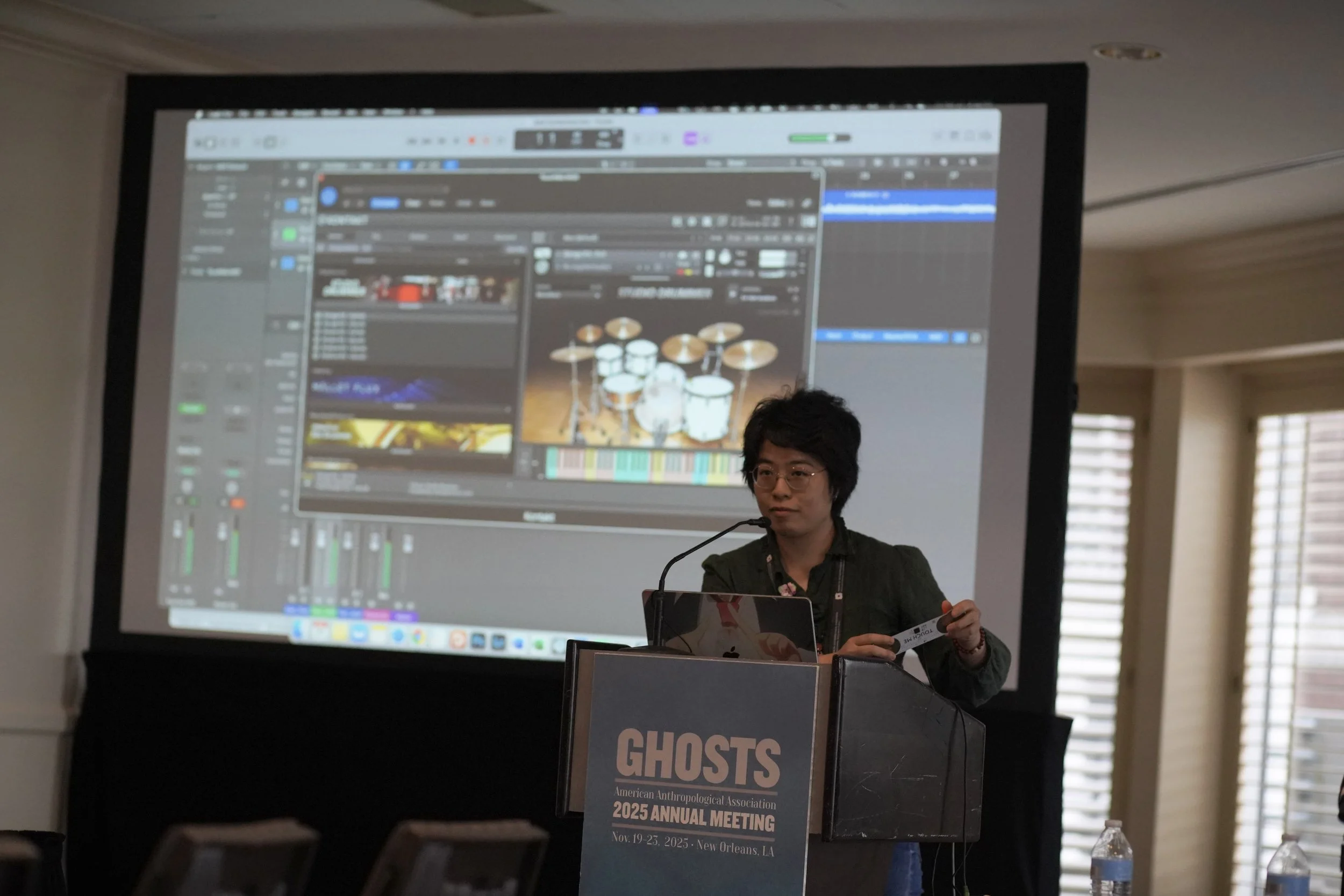
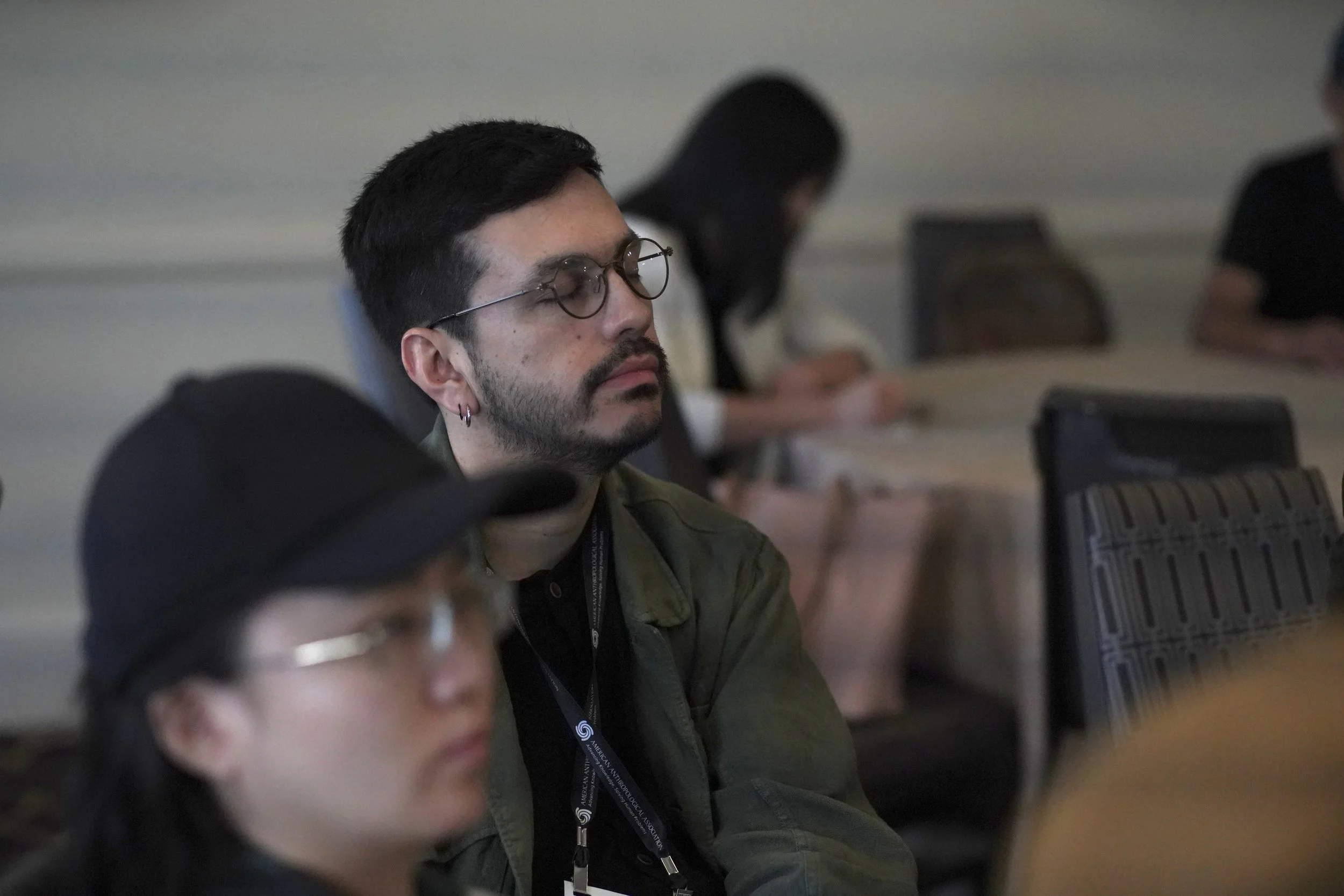
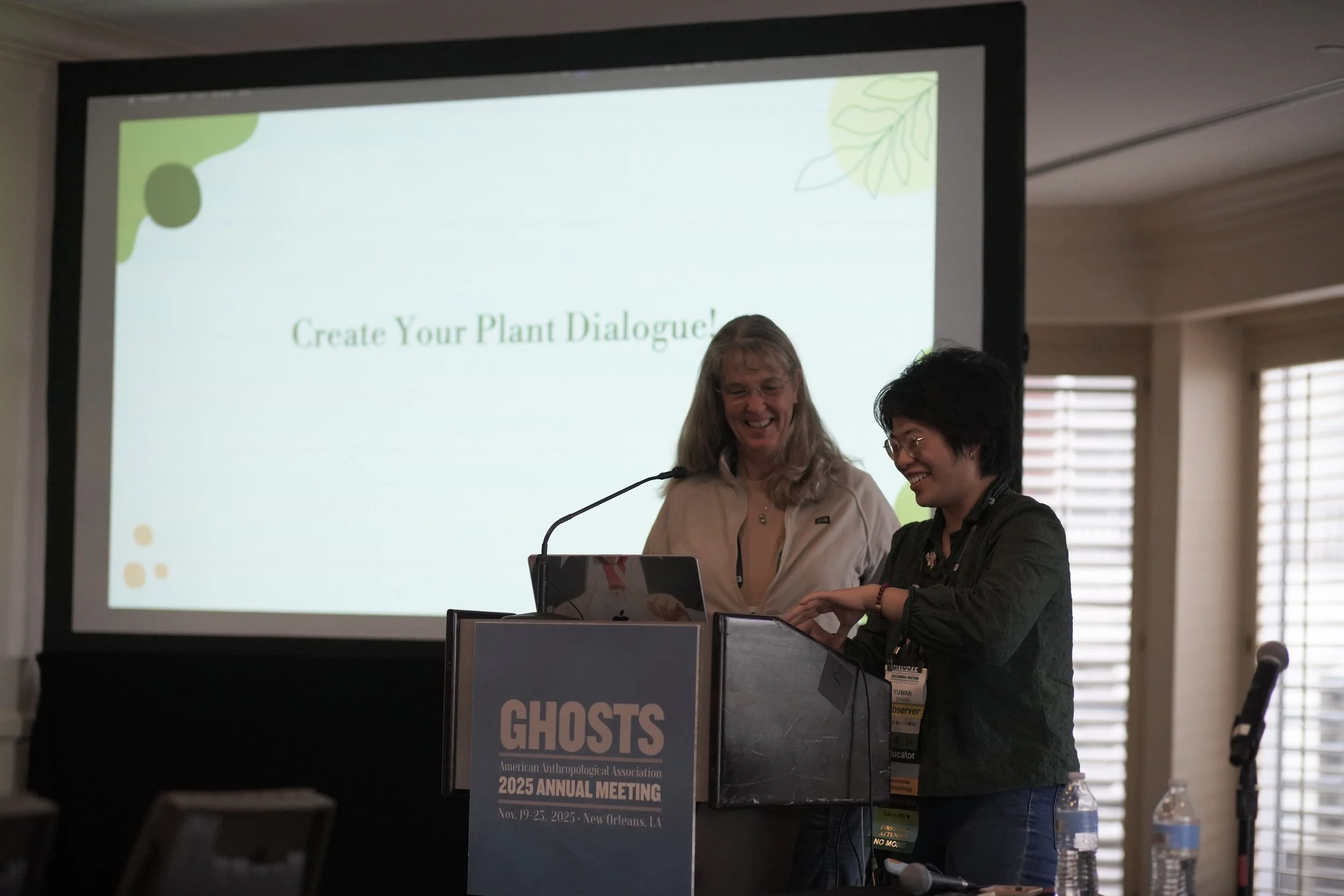
This project emerges from my long-term exploration of how listening is experienced through the body across composition, pedagogy, and interdisciplinary practice. I had the honor of presenting this research at the American Anthropological Association Annual Meeting (AAA), one of the world’s most influential conferences in anthropology. This presentation marked the first time my embodied listening practice was formally situated within an anthropological and sensory research framework.
At the core of this study is the proposal that listening is not a passive reception of sound, but an active process of self-observation. Through repetition and sustained sensory engagement, listening gradually becomes a mirror that reflects a listener’s shifting attention, emotional states, and bodily responses.
Technology, rather than functioning solely as a mediating tool, becomes a perceptual collaborator that reshapes how the body senses, responds to, and co-creates sonic relations with non-human agents such as plants. This process also invites a shift in how we relate to sound itself, moving beyond aesthetic judgment toward an open acceptance of non-aesthetic, everyday, and often overlooked sonic experiences.
A key focus of this project is the role of non-aesthetic sound. I am particularly interested in everyday, ambiguous, and unstable sounds that do not easily fit into categories of “beauty” or musical value. By suspending aesthetic judgment and returning listening to the level of bodily sensation, the project asks how perception, learning, and self-awareness might fundamentally shift.
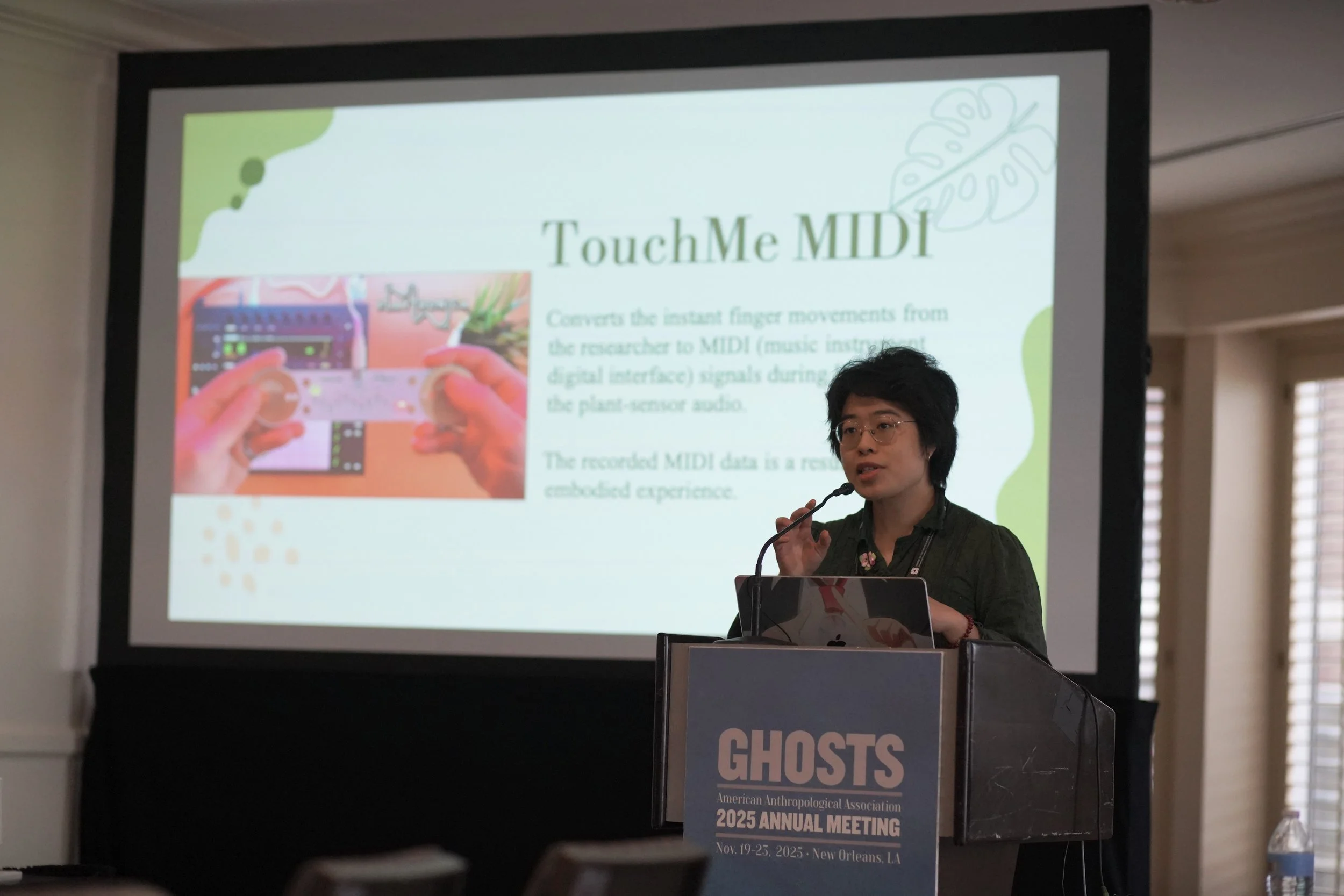
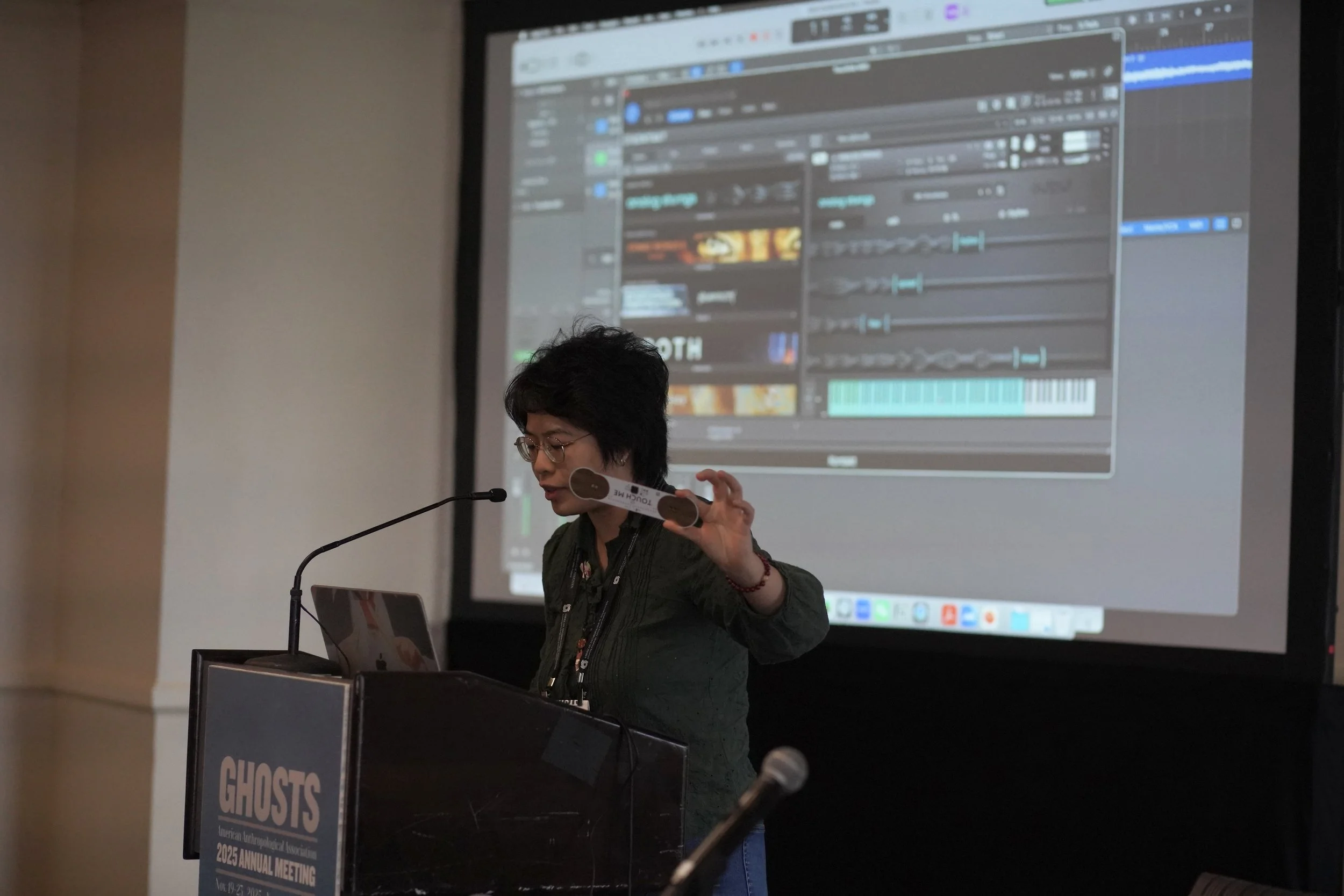
Methodologically, the technologies used in this project may appear basic or routine within the music industry. However, when these familiar tools are placed within an interdisciplinary context and brought into dialogue with anthropology, education, and human–nonhuman relations, their meanings and functions are transformed. In this translational process, technology becomes not only a means of production, but a method of inquiry into perception, relationality, and embodied knowledge.
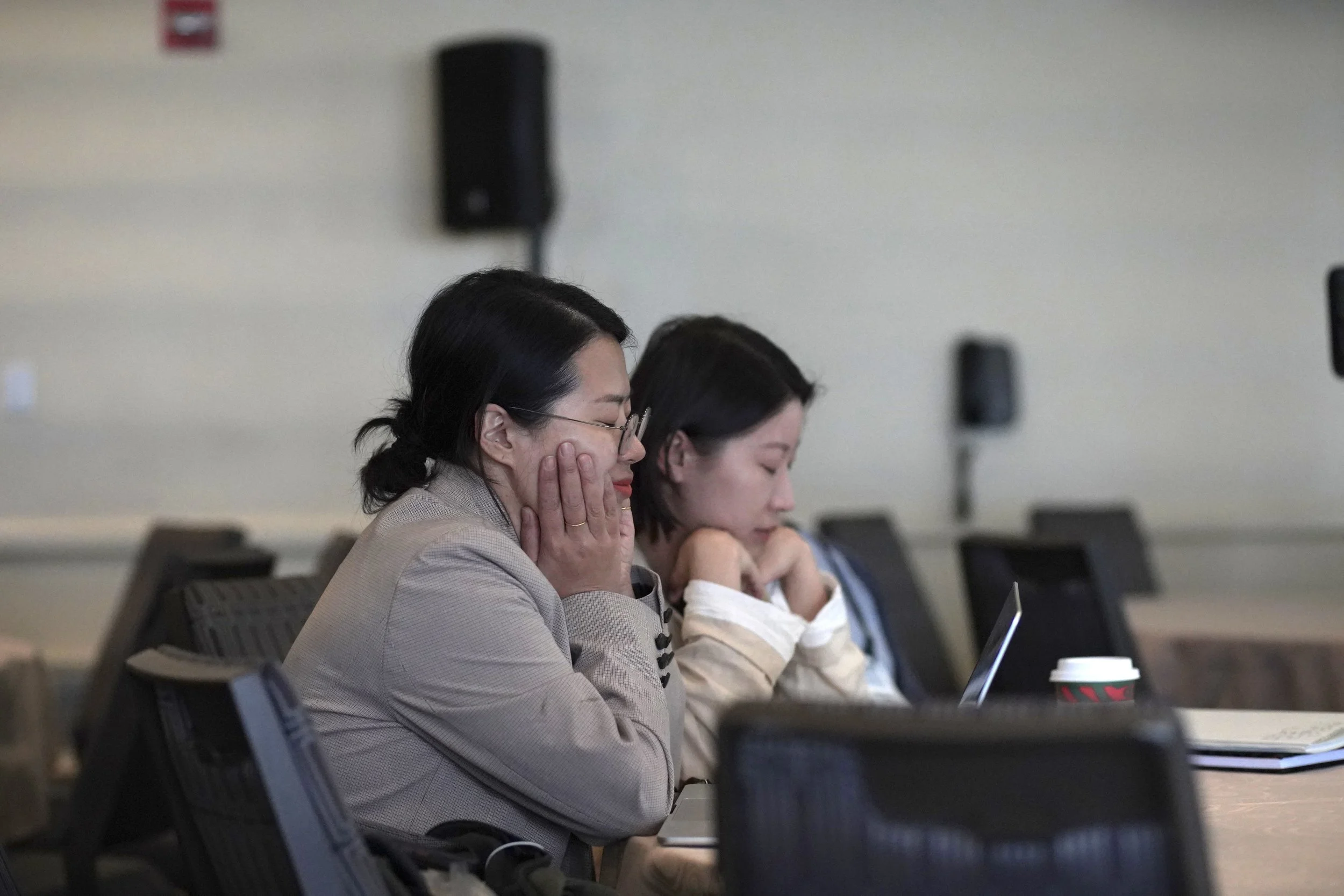
As a composer and educator, I am deeply committed to the reciprocal relationship between artistic practice, teaching, and research. What moved me most after the AAA presentation was that many scholars and educators approached me to share how inspired they felt, and several expressed their intention to bring embodied, sensory, and non-aesthetic listening practices into their future classrooms.
This project has since developed into a full-length academic article and has been submitted to the Journal of Sonic Studies. It now forms an important foundation for my future teaching and research trajectory focused on embodied listening, sensory pedagogy, and sound-based education.
本项目源于我近年来在作曲、教学与跨学科实践中,对“聆听如何通过身体发生”的持续探索。我有幸在American Anthropological Association Annual Meeting(AAA)这一全球最具影响力的人类学学术会议上展示该研究成果。这也是我首次将长期实践中的具身聆听方法,系统性地置入人类学与感官研究的学术语境之中。
本研究的核心观点是:聆听并非对声音的被动接收,而是一种对自我状态的主动观察过程。通过重复性的聆听与持续的感官介入,聆听逐渐成为一面“镜子”,映照出个体的注意力变化、情绪流动与身体反应。
在这一过程中,技术不再只是传递声音的媒介工具,而是作为一种“感知合作者”,参与并重塑身体如何感知、回应,并与植物等非人主体共同生成声音关系。这也促使我们重新理解“声音”的意义,从审美评判转向对非审美性声音的开放接纳,关注那些日常的、被忽略的、无法被简单定义为“好听”的声音经验。
本项目特别聚焦于非审美性声音在感知与学习中的角色。我所关注的是那些模糊的、暧昧的、不稳定的日常声音,当我们暂时放下审美判断,仅通过身体与感官去聆听时,感知结构、学习方式与自我觉察是否会发生根本性的转变。
在方法层面,本项目所使用的技术手段,在音乐行业中或许只是非常基础、常见的工具。但当这些“熟悉的技术”被置入跨学科语境,与人类学、教育学以及“人类与非人关系”的讨论并置时,它们的意义与功能发生了转译与扩展。技术不再只是生产工具,而成为一种进入感知、关系结构与具身知识的研究方法。
作为一名作曲家与教育者,我始终致力于在艺术实践、教学与研究之间建立相互滋养的关系。在AAA的分享结束后,多位学者与教师主动与我交流,表示深受启发,并计划将具身的、感官导向的、非审美性的聆听方式引入他们未来的课堂与教学实践中。
目前,本项目已发展为一篇完整的学术论文,并投稿至 Journal of Sonic Studies,同时也成为我未来教学与研究方向的重要基础,持续聚焦于具身聆听、感官教育与声音为核心的教学实践。
Audio Fragments from the Project
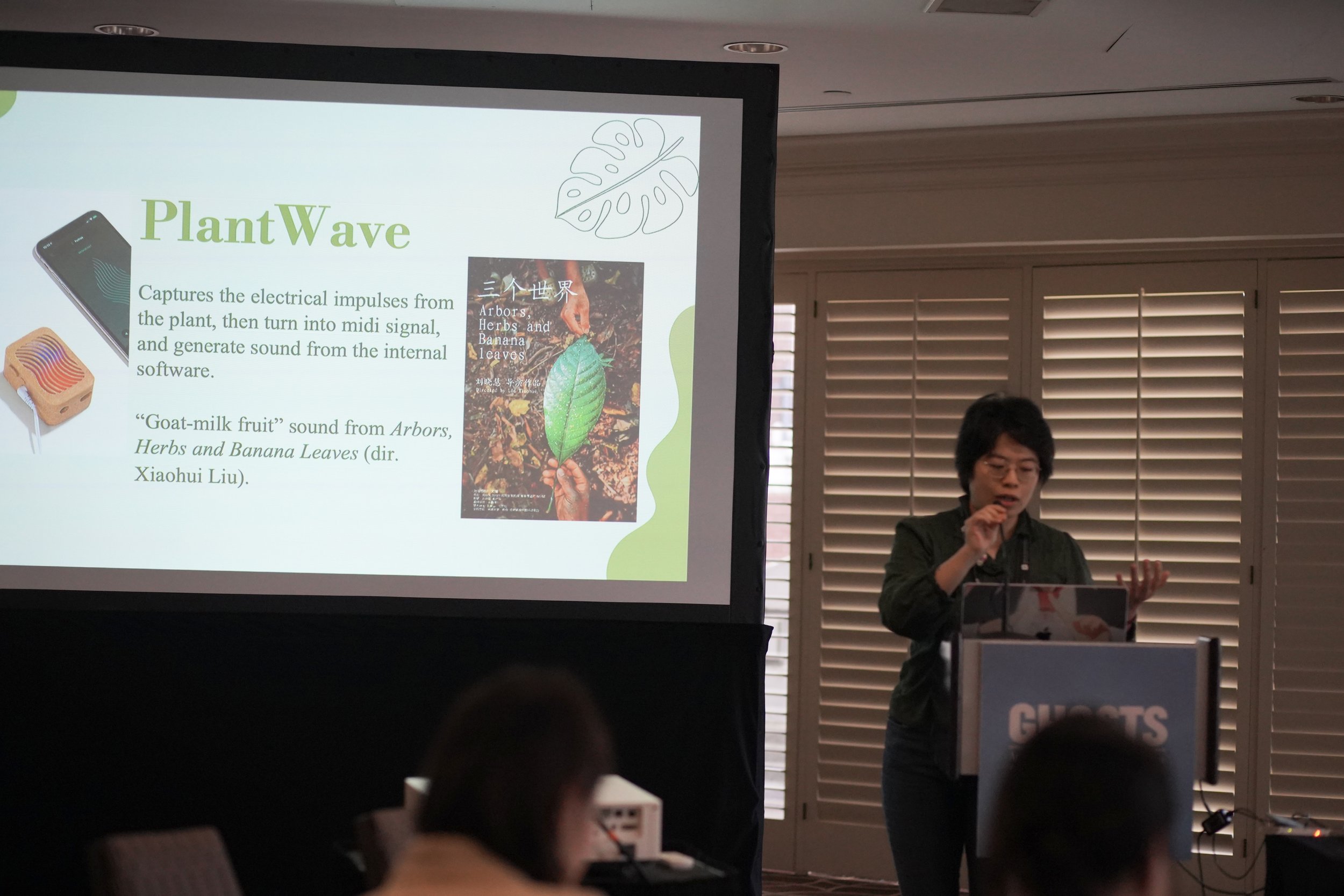
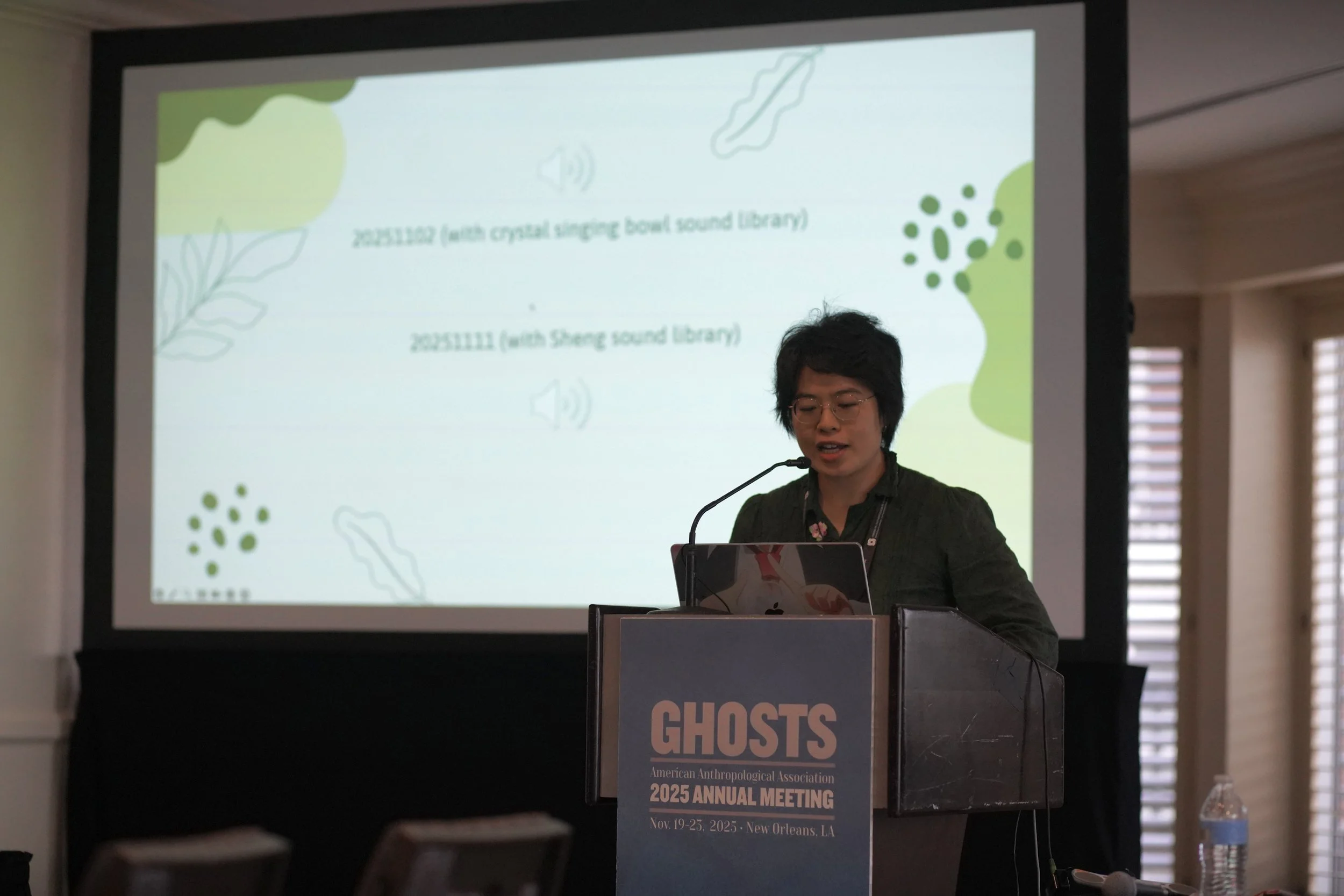
These audio fragments are presented not as musical compositions, but as sensory documentation drawn from a time-based embodied listening study. They trace how bodily attention, breath, vibration, and non-aesthetic sound awareness shift through repeated human–plant–technology encounters. The background textures in both fragments are sourced from documentary Arbors, Herbs and Banana Leaves (dir. Xiaohui Liu), extending the listening context across personal, environmental, and media-based layers.
以下音频并非作为“音乐作品”呈现,而是作为具身聆听研究过程中的感官记录(sensory documentation)。它们呈现了在反复的人–植物–技术聆听实践中,身体注意力、呼吸、振动感知与非审美性声音觉察的变化过程。两条音频中的背景声源,均取自纪录片 《三个世界》(导演:刘晓慧),为聆听提供了来自影像、环境与个人叙事层面的多重语境。
Audio 1: Singing bowl sample and vocal improvisation
In this fragment, both my vocal improvisation and a virtual singing bowl are triggered and shaped through direct contact with a TouchMe MIDI interface, while audio from the documentary Arbors, Herbs and Banana Leaves serves as an ambient background layer. The singing bowl creates a stable, continuous resonance, forming a calm and spacious sonic field in which my voice can move freely. Rather than emphasizing musical development, this fragment highlights how steady vibration and gentle touch produce a grounded, non-aesthetic listening environment.
音频一:颂钵音源与即兴人声
这一片段中,我的人声即兴与通过 TouchMe MIDI 身体触摸触发的虚拟颂钵共同构成主要声源,纪录片 Arbors, Herbs and Banana Leaves 的声音作为环境背景。颂钵产生的是稳定、持续的共鸣音场,为人声的流动提供了一个平静而宽阔的聆听空间。此片段的重点不在旋律或发展,而在于通过轻触与持续振动所形成的稳定、非审美性的聆听环境。
Audio 2: Sheng sample and vocal improvisation
This fragment uses the same setup, but the sheng introduces a very different listening experience. Because of its naturally unstable overtones and dissonant intervals, even small variations in touch generate irregular textures and shifting harmonic tension. My voice responds within this more unpredictable field, reflecting how perception adjusts when the sonic environment becomes less stable, more fragmented, and more texturally complex.
音频二:笙音源与即兴人声
这一片段使用相同的结构,但由于笙本身具有不稳定泛音与自然不协和音的特性,即便是触摸方式的细微变化,也会产生破碎、紧张与不规则的声纹。在这样的不稳定声场中,我的人声会随着这些变化而调整或偏离,呈现出一种在更复杂、更不可预测的声音环境中聆听如何自我调整的过程。
Presenting Audio Sample 1
Presenting Audio Sample 2
Audience Interaction Improvisation