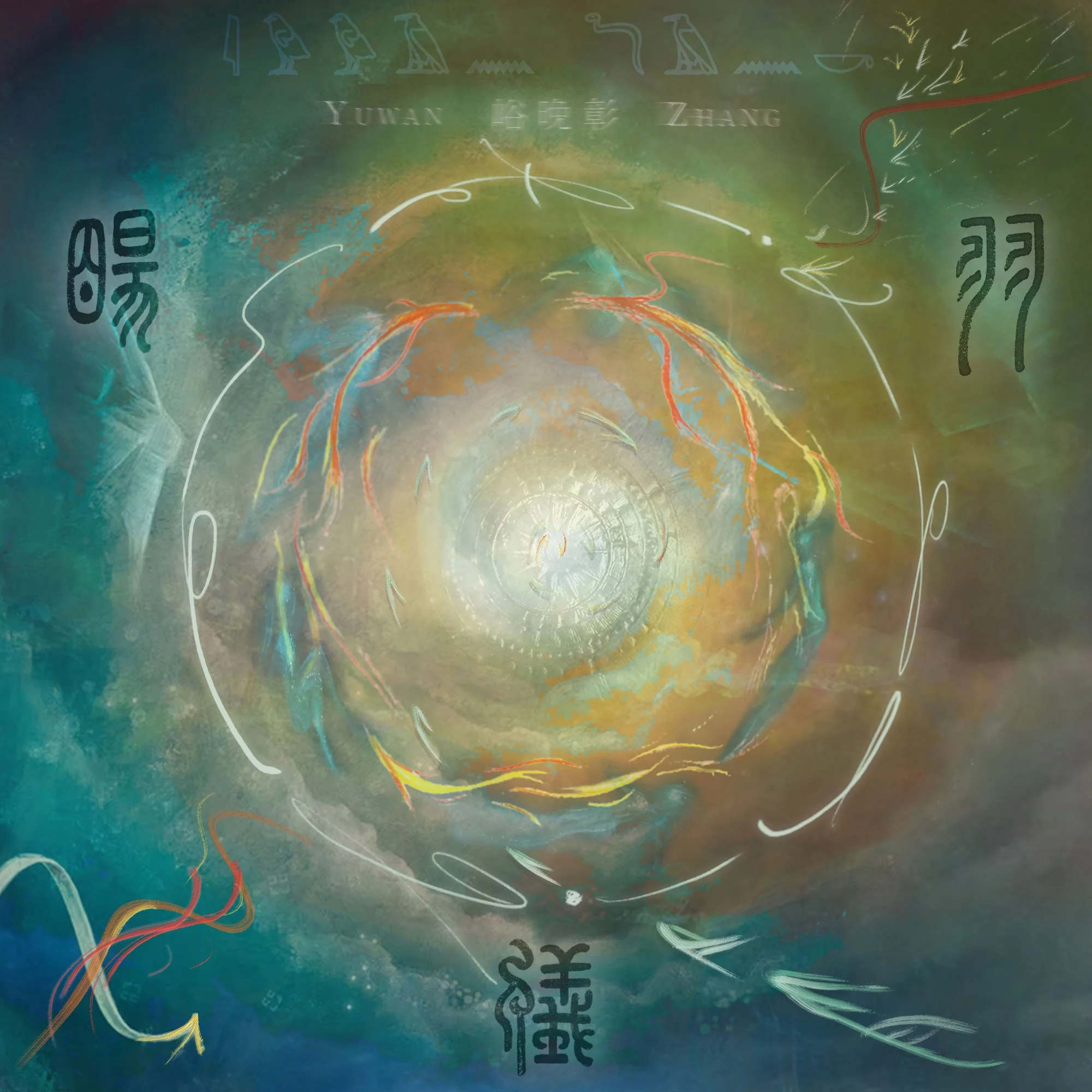
Cover design: Yuwan Zhang, Angela Bermúdez, Yuchong Lu
Cross-cultural ceremonial single Sol Bird Rite, composed by Yuwan Zhang, is now available on all streaming platforms.
峪晚彰跨文化单曲《暘羽仪》,现已登陆各大音乐平台。
Page Overview 本页导览
Credits 署名
Lyrics 歌词
Composition Concept 创作概念
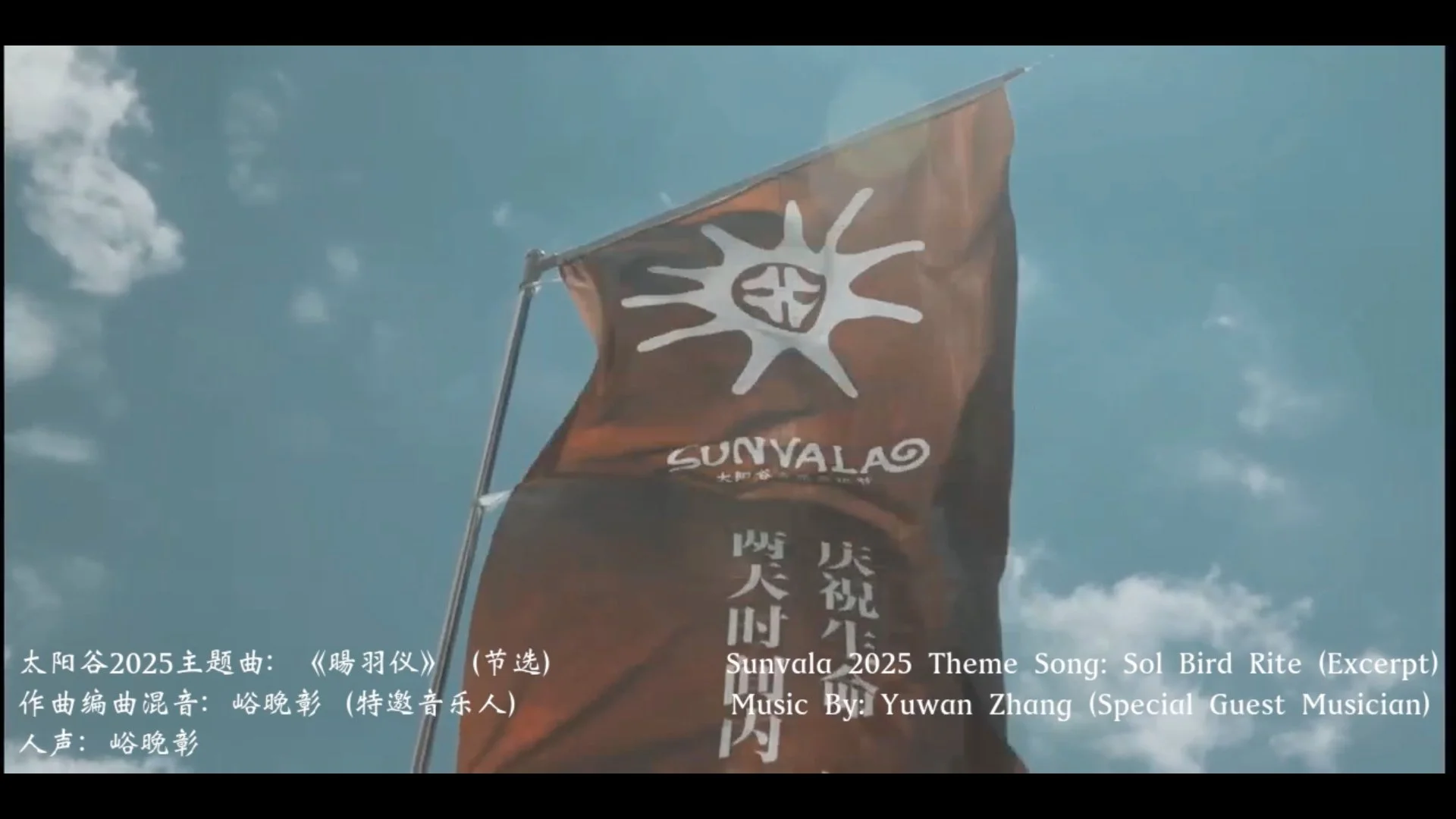
Sunvala Official Event Review Video 太阳谷官方活动回顾视频
Exhibitions 参展
Gallery 相关图片
Credits 署名:
Composer 作曲: Yuwan Zhang
Vocal 人声: Yuwan Zhang
Woodwind 吹奏乐器: Tianlei Zhang
Recording/Mixing 录音混音:Yuwan Zhang
Special Thanks 特别鸣谢: M.B. Gordy, Crystal Heiman Yip
Lyrics 歌词:
Sol (Sun 太阳)
Soleil (Sun 太阳)
飞 (Fly)
飞啊 (Fly)
飞 (Fly)
Tut wu-a yeri enti (Oh, one creator of all things 万物之造者)
Wa-a wa-u yeri wenenet (Oh, one maker of all existences 诸有之成者)
Perer en rem em yertif (Men came forth from his two eyes 人由其目光而生)
Kheper netcheru tep ref (The gods sprang into existence at the utterances of his mouth 神因其圣言而现)
Se-ankh puyu em khet nebet (And the birds that are on every green thing 飞鸟自每一片青翠之地振翼而起)
Hrak yeri (Hail to thee, maker of all these things 向你致敬,化生万象者)
Enen er a-u (Thou only one 唯一之尊)
飞呀 (Fly)
飞呀 (Fly)
Composition Concept 创作概念 (中文版请向下翻阅)
Sol Bird Rite was created for the 2025 Sunvala Cultural Music Festival in Guiyang, China. I was honored to be invited as the special guest musician to create and offer this theme piece for the festival’s sunset closing ritual, inviting everyone to greet the sun as it descends. The work traces global sun-worship lineages across time and land, weaving memory, myth, and breath into one offering.
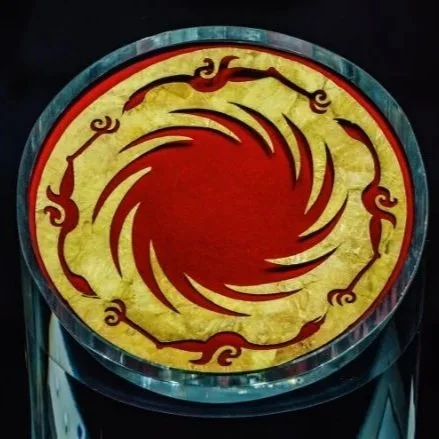
The first spark rose from my hometown, Chengdu, where the 3000-year-old Golden Sun Bird was unearthed at the Jinsha site, where it belonged at the very center of the altar, holding the core position in the ancient sun-worship ritual (see reference picture from below). Jinsha is China's ancient Shu civilization, which worshipped the sun, and I grew up on that soil. Even before I understood archaeology or symbolism, I felt magnetically drawn to this symbol as a child. Only later did I realize it was the pull of ancestral memory, speaking long before language. Therefore in my impression, “Sun” and “Bird” should be connected, and I decided to add the bird as another equally important element in this piece.
I wanted the sun not only as a concept, but as a sound. In Spanish, “Sol” means sun and is also the musical pitch Sol/G, so the first syllable I sing is “Sol.” From there, it opens into “Soleil ”(French “sun”). “Soleil” ends with the sound “ei”, which led me naturally to the Chinese “fei” (飞), meaning “to fly.” The sound travels from sun to sun to flight, becoming movement, wing, sky. For listeners who do not know the meaning of the words, the voice simply returns to pure syllables. There is no need to analyze. Just feel the sensation of flying, of freedom.
The second half draws from the Great Hymn to Aten (around 1350 BCE, nearly 3400 years ago), a text that also inspired Philip Glass’s Akhnaten, my favorite opera. One of humanity’s earliest hymns to the sun, I added a shamanic drum and Chinese local instruments in the background, creating a cross-era and cultural bridge.
These instruments come from different cultural and tuning systems, especially the folk wind instruments from the mountains of Guizhou. I invited multi-instrumentalist Tianlei Zhang to record two types of Lusheng (from the Miao people), bird flute, Mangtong, Ye Xiao, and Sanyan Xiao, letting their breath-born timbres shape the sonic landscape. From this local breath, the sound travels outward, carrying homeland memory into the world.
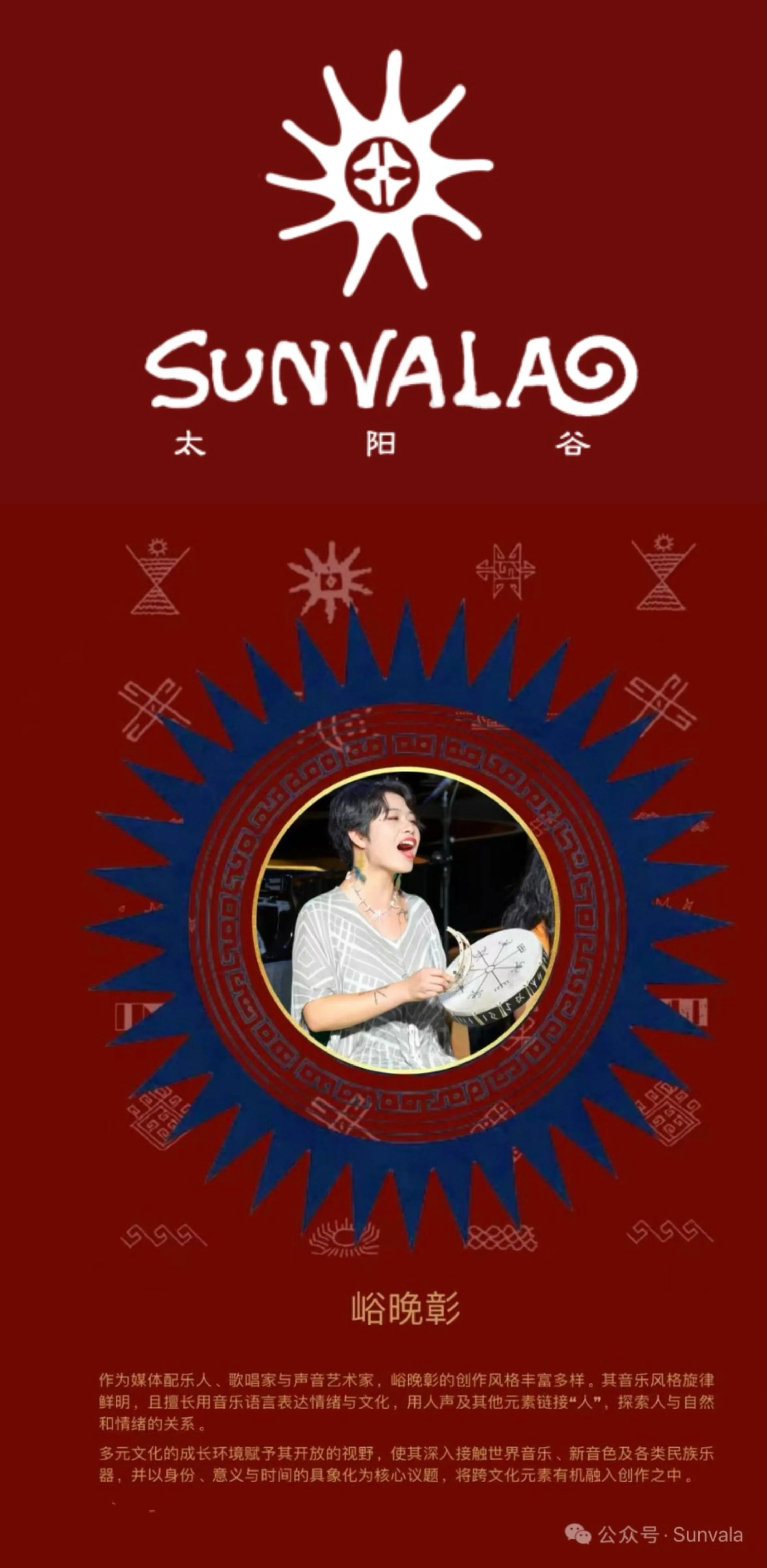
The piece gathers voices from many sun-carrying cultures: the Bronze Drum from Guizhou (usually centered with Sun symbol), a stone qin from Jinsha (ancient Sun worship culture from China's ancient Shu civilization), an ivory horn known as the oliphant (included in reference to the large quantities of ritual ivory unearthed at Jinsha), a set of Mexican singing stone (Mexico is home to Maya heritage and solar traditions), and a 12000-year-old bird-bone flute from Enyan-Mallaha, Israel. Across many civilizations, the sun has stood as a shared axis of devotion. When these lineages meet, the field of energy amplifies. They assemble not as museum echoes, but as living presences, memory breathing through vibration, a global ritual of sound.
Because many of these instruments come from different tuning systems, writing for them together was a real challenge. Several tones naturally fall outside Western pitch expectations, and some notes physically cannot be played on certain instruments. To preserve melodic flow while respecting each instrument’s nature, I used subtle pitch shifting and electronic processing. In this sense, the work is also a form of electronic music: a contemporary ritual built through ancient breath and modern technology, where primordial sound meets digital spirit.
I kept the rawness of my voice and resisted correcting so-called “off-pitch” moments. Instead of chasing purity in tuning, I invite listeners to release the idea of correctness in pitch and enter the feeling instead. The voice does not follow a scale here; it follows instinct, breath, and emotion. What meaning does “correct pitch” hold before nature’s infinite tuning, where every possibility already lives? The wind, birdbone flute, and ancient sound never followed the equal temperament; why does the voice have to follow the rule then? Here, voice returned to its nature, and back to “perception before the rules“. In the nature of infinity, the “out of tune” does not exist. Nature embraces all the sounds, thus this time, I chose to return my voice to freedom.
I am deeply grateful to Grammy winner MB Gordy, whose shamanic drums bless this piece, and also to my friend Crystal Heiman Yip for mixing insights. The cover art is conceptually inspired by the Jinsha Sun Bird and incorporates fragments of paintings by my painter friend Angela Bermúdez, and original ancient-style Chinese calligraphy handwritten by my artist friend Yuchong Lu, with a Bronze Drum sun at the center as its core symbol.
This work traces devotion, migration, and ancestral memory. I wish every listener could feel the calling of the sun while listening to this piece. The sun is always with us, as it lives in our hearts.
创作概念介绍:
受邀作为2025太阳谷文化音乐节特邀音乐人,我创作了《暘羽仪 Sol Bird Rite》作为闭幕日落仪式与本届主题曲。当夕阳缓缓降下,人群共同面向光,这首作品如祭声般升起。它穿越时间、土地与语言的疆界,汇聚世界各地的太阳崇拜象征,让古老文明的记忆与当下身体的呼吸在同一片声场共振,成为献给太阳的仪式。
最初的灵感来自我的故乡成都出土的太阳神鸟金箔。源于古蜀王国的金沙文明,它曾安放于祭坛正中,是古代太阳崇拜的核心象征。我从小踏在那片土地上,尚未懂得考古与符号时,就已不可名状地被它吸引。长大后才明白,那是来自祖先记忆的牵引,在当今语言之前便已发生。所以在我的印象中,“太阳”和“神鸟”是某种程度上划等号的,因此也决定在这首曲子中加入飞鸟作为另一个主要元素。
我希望“太阳”不仅是概念,也能化为声音。在西班牙语中,“Sol”意为太阳,同时也是音乐音级中的sol音,因此我以“Sol”开声。随后延展至法语“soleil”,意为太阳。Soleil 的尾音“ei”自然滑向中文的“飞(fei)”,声音化为飞鸟,自太阳飞向太阳,再飞向天空与自由。对于不懂歌词含义的人来说,声音回归音节本身,不需要分析,只需要感受飞翔的自由与身体的解放。
作品后半段歌词取材自公元前1350年左右的古埃及《阿顿颂诗》,距今约3400年。这篇文本也曾启发Philip Glass的歌剧《阿肯那顿》,也是我最喜爱的歌剧。《阿顿颂诗》被视为人类最早的太阳赞歌之一,在本作中我搭配了萨满鼓与本土乐器,筑起跨文明与时代的桥梁。
作品中使用的乐器来自不同文化与调律系统,尤其是贵州本土吹奏乐器。我有幸邀请到多乐器演奏家张天雷老师,录制了两种传统芦笙、鸟哨、芒筒、夜箫与三眼箫,让山川与土地的呼吸自然进入音乐。从这片土地的气息出发,带着本土文化与声音走向世界。
作品汇聚世界多种太阳的声音:贵州铜鼓(正中往往是太阳纹)、萨满鼓(太阳作为萨满自然崇拜的重要部分)、金沙石磬(古蜀太阳崇拜)、象牙号(呼应金沙遗址大量祭祀象牙)、来自墨西哥的singing stone(墨西哥也是玛雅太阳文化之地)、以及一支来自以色列的距今约12000年的鸟骨笛。跨文明的太阳记忆在此相遇,能量加持到最大。它们不再是博物馆中的回响,而是活着的声音,记忆通过震动继续呼吸,构成一场全球性的声音祭仪。
由于运用的乐器来自太多的地方,调律差异悬殊,而将“不在一个调”上的乐器写在一起,是本次创作最大的挑战。曲中有些音高超出了乐器的音域范围,因此我在保持原声质感的前提下,用软件进行了细微的音高处理。作品因此也属于带有电子音乐的性质,以现代手段重构远古仪式,是古老之息与当代科技的交汇。
在演唱中,我刻意保留了人声的粗粝与所谓的“走音”。我不再追求绝对的音准,而邀请听众暂时放下对音高的判断,进入纯粹的感受。此时声音不再服从音阶,而是追随本能、呼吸与情绪。在自然无限的调律中,“正确音高”究竟意味着什么?山风、鸟骨与远古之声从未遵循平均律,人声又为何必须服从规则?在这里,声音回到本性,回到“感知先于规范”的原点。在无限的自然中,“走音”并不存在。自然接纳一切声音,所以这一次,我选择让声音回到自由。
曲中萨满鼓来自好莱坞传奇鼓手MB Gordy的支持,所以这首曲子某种程度上也是被格莱美奖得主祝福的作品。也感谢我的朋友叶曦汶在混音上的建议。封面创作概念借用了金沙太阳神鸟的象征结构与光环特质,并结合我的画家朋友Angela Bermúdez的绘画拼贴与另一位艺术家朋友陆宇翀原创手写题词的古代仪式字体,正中间为贵州铜鼓的太阳纹。
在这里,太阳点燃庄严、野性与召唤,唤醒身体深处沉睡的古老力量。
这是一首承载信仰流动、文化迁徙与祖源记忆的作品,声音在跨越时空的回响中回到身体。希望每一位听众在聆听时,都能感到太阳的召唤。太阳始终在我们心中。
Sunvala Official Event Review Video
太阳谷官方活动回顾视频
Exhibitions 参展
Theme and the music of Sunset Ceremony of 2025 Sunvala Music Cultural Festival, Guiyang, China, August 2025.
2025太阳谷音乐文化节主题曲与日落仪式曲,中国贵阳 · 2025年8月
Opening Ceremony of Ritual In Progress, London, UK, September 2025.
“物言仪启”活动开幕式曲,英国伦敦 · 2025年9月
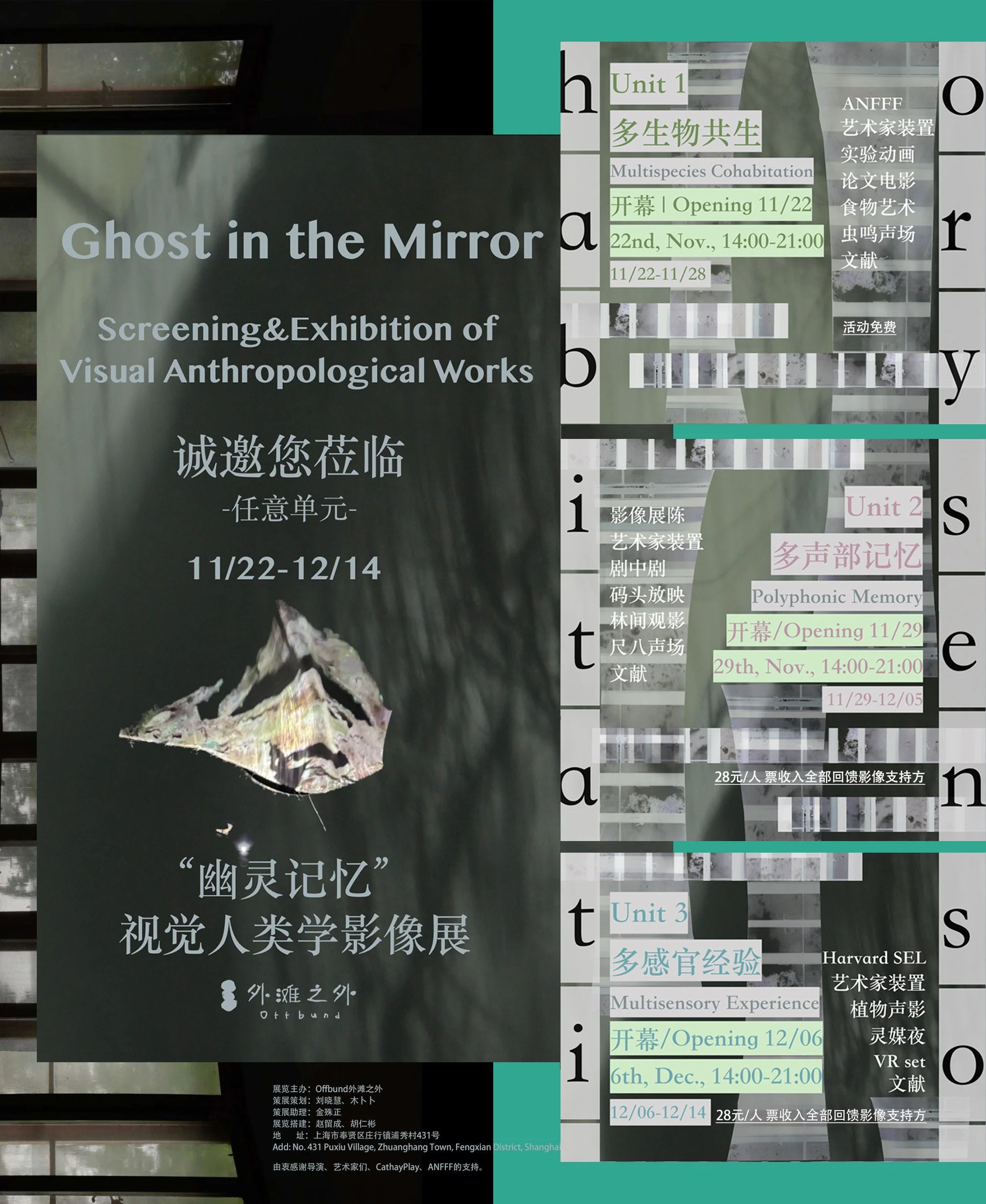
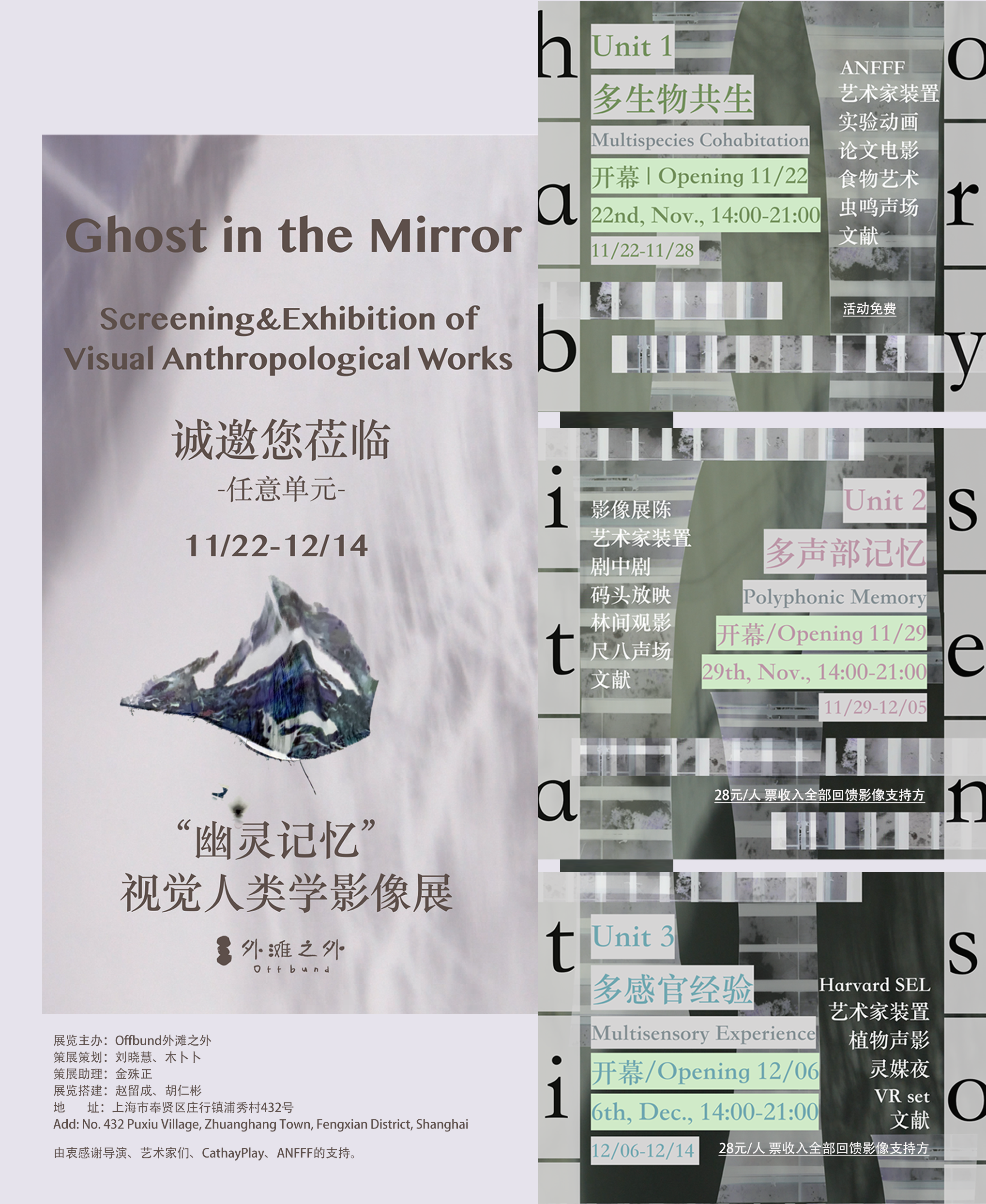
Multisensory Installation Experience of Ghost In Mirror, curated by Offbund, CathayPlay, co-exhibited with Harvard Sensory Ethnography Lab. Participants will be given flashlights to improvise hand-shadow puppets along with the music in the forest at night, and embrace the wildness. Shanghai, China, December 2025.
“幽灵记忆"视觉人类学影像展多感官体验单元互动装置,由外滩之外、CathayPlay主办,与哈佛大学感官民族志实验室作品一同展览。观众通过手电筒,跟随《暘羽仪》,将夜晚的森林作为幕布,用光影即兴自己内心的野性。中国上海 · 2025年12月
Participants improvise with hand shadows
观众即兴手影片段